The itch
You get home. The phone gets home too. It follows you to the sofa, the table, the bathroom. Very loyal. Too loyal.
Projects / 01
All projectsUse the phone to get away from the phone.
How much time do you have?
At a glance
Hyper Compass
You get home. The phone gets home too. It follows you to the sofa, the table, the bathroom. Very loyal. Too loyal.
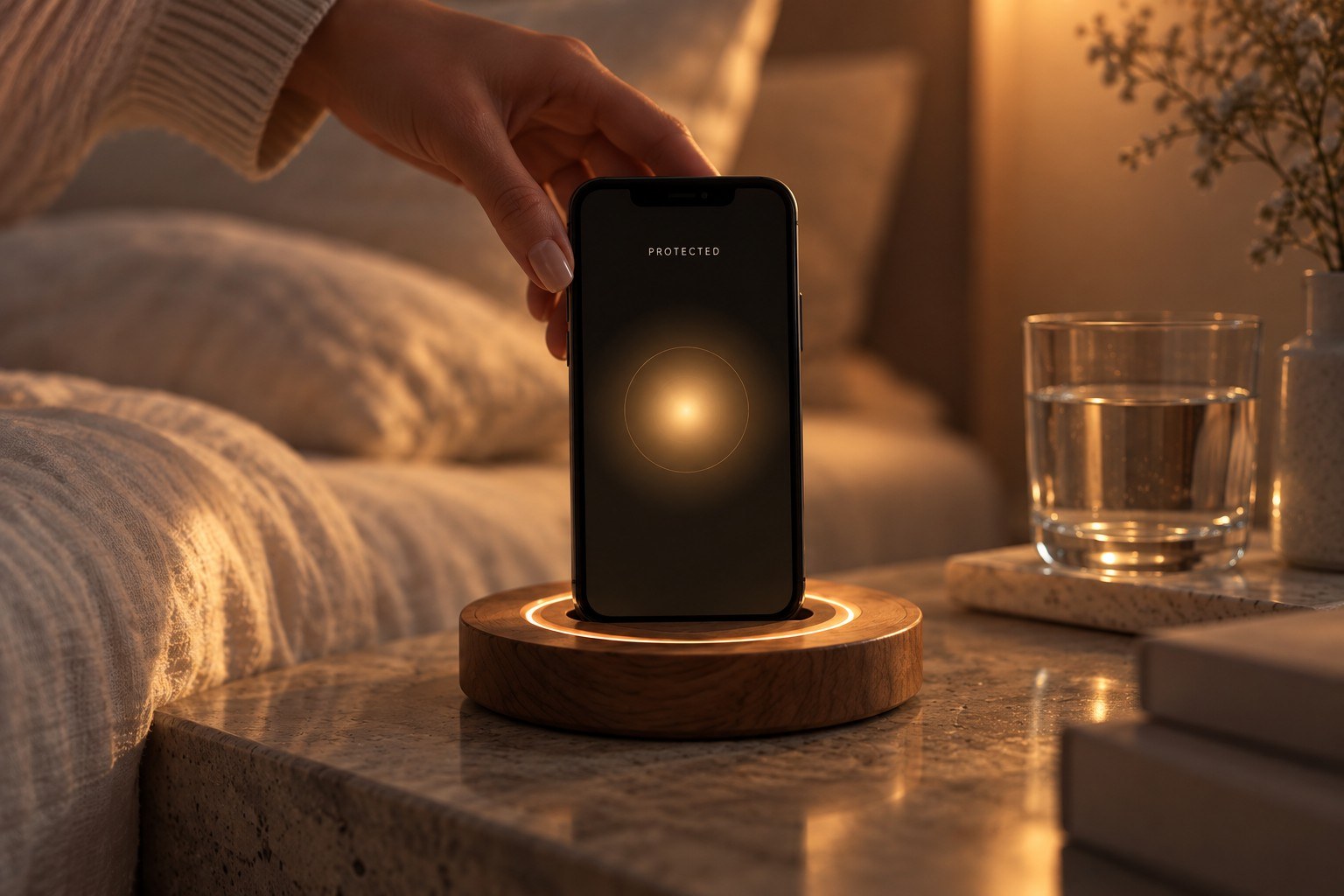
Rest it on a base. Notifications, microphone, tracking, calls, Wi-Fi and location go quiet. A calm screen takes over. The phone charges. So do you.
No punishment, no streaks, no guilt. The phone isn't the villain. It just needs to learn when to leave the room.
In use
The prototype
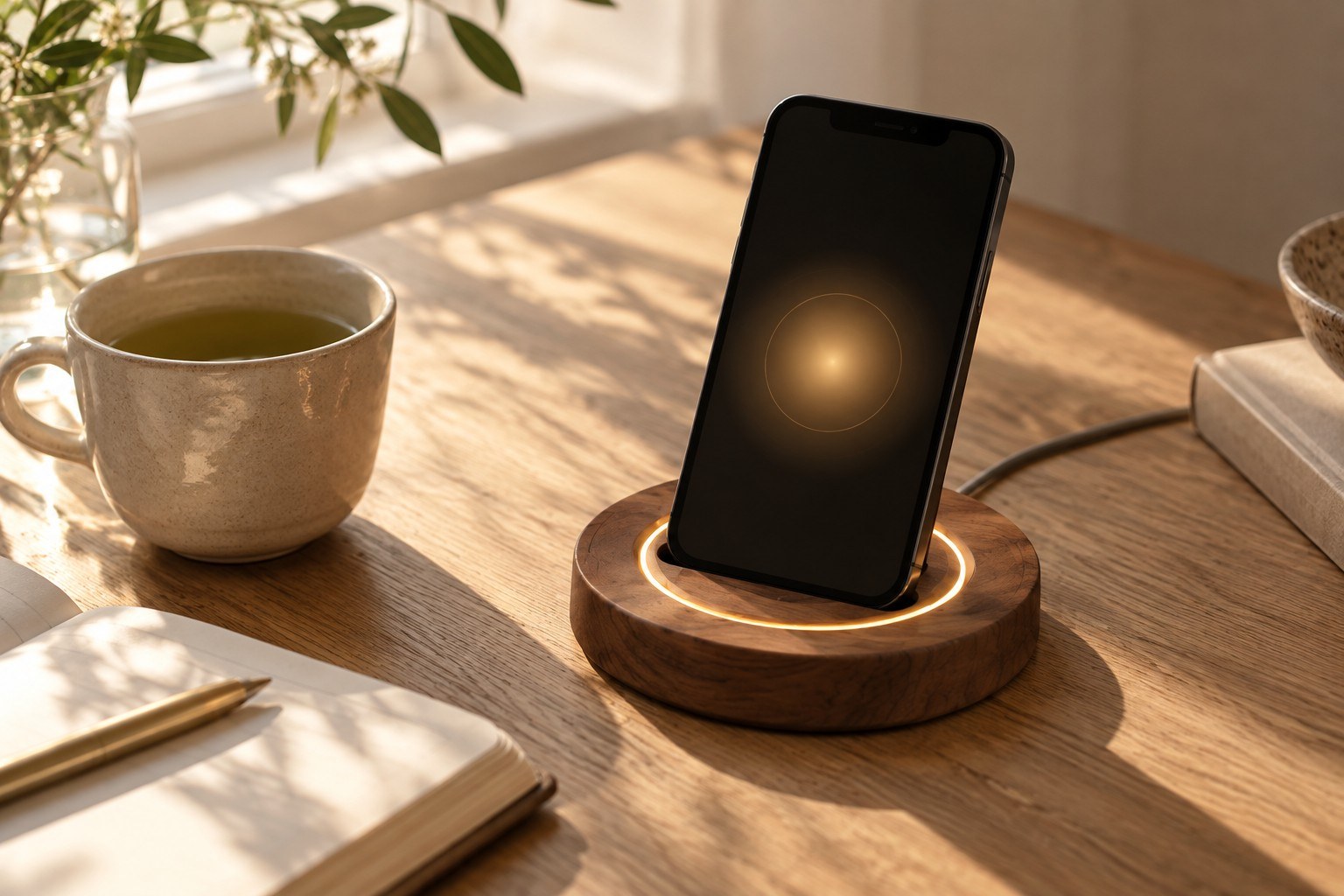
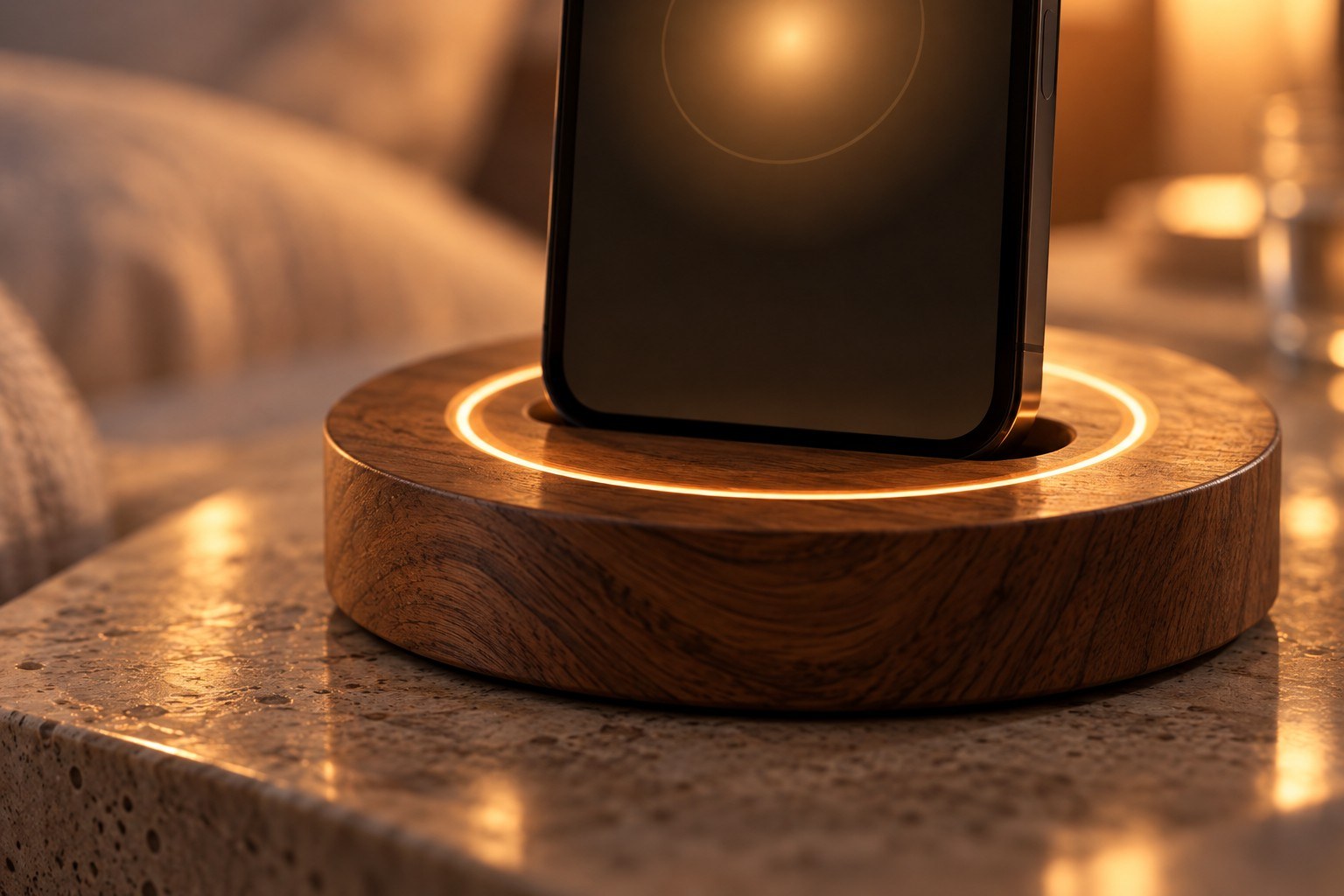
Almost nothing on screen, on purpose. Rest the phone, everything switches off, and you pick a place. One tap changes it later.
Open the interactive prototypeHow it works
Shoes off. Phone out. Same as every evening.
HunchA bit of weight, a soft magnet, a satisfying click. The gesture is the ritual.
Notifications, microphones, data tracking, calls, Wi-Fi and location switch off. A calm interface fades in and the base starts to glow.
Research
We went looking for what actually relaxes people. Less than we hoped, more honest than we feared.
130 young people, 30 minutes of forest against industrial noise. Mood, sense of restoration and focused attention improved. Pulse, blood pressure, HRV and cortisol didn't.
PartialA review of 223 studies finds a consistent rise in vagal HRV at around six breaths a minute. Modest effect, but the only lever with a clear body response.
SolidWeak evidence. In one sleep study with 25 people it made REM sleep worse, and earplugs did better. We won't sell it as a magic ingredient.
WeakOne 12-person study, which its authors call preliminary, saw faster recovery after stress. Not enough to choose the colour of a base. Colour stays up to you.
PreliminaryMedium complexity (D≈1.6) is the most liked, but feeling relaxed drops as complexity rises. So backgrounds stay simple: mist, soft layers, little detail.
UsefulSo the promise is: you'll feel better and clearer. Not: your stress is scientifically gone.
Behind the scenes
Inspired by OmmWriter: almost nothing on screen, a column of tiny circles, one open choice at a time. Backgrounds are misty landscapes that change very slowly.
The first prototype opened with a 20-second intro and a mono-type "System override" list. Cold, techy, a bit mission control. The plan: under five seconds, and the light on the base sets the pace.
Choice is a trap when you're tired, so there are three layers. After 14 seconds Pause starts with your last choice. Or answer one question with four destinations. Fine tuning exists, but it's hidden.
No streaks, no minutes, no scores. The screen says nothing is optimising you, so it can't grade you either.
Phone on a base, a different interface on screen. Matte, natural materials, because softer and curved things tend to feel better. The materials and shapes are our hypotheses, not findings.
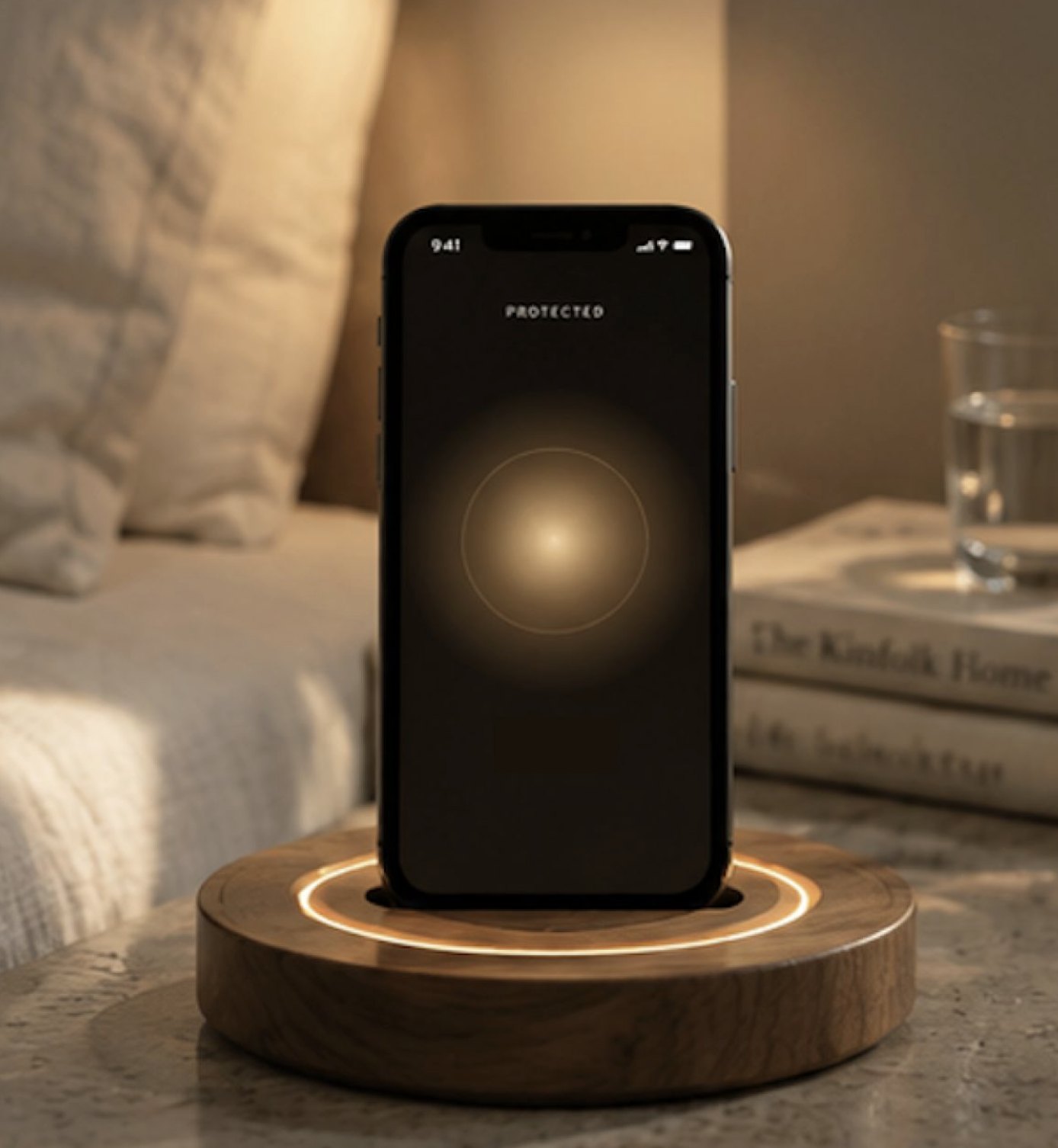
The phone fits in a hollow. Screen: mist and mountains.
Walnut disc with a warm ring of light. Night-amber screen, no whites.
Ceramic with a perforated speaker. Omm-style circle menu.
Translucent block that gives off diffuse light. Field of colour on screen.
Charge shown as a ring of light, repeated on screen: "Charging. You too." The closest to the charger idea: the phone charges, and so do you.
A minimal pedestal, like a candle without a flame. One sentence on screen.
Sketches of intent, not renders
The principle
We don't need less technology. We need technology that knows when to appear, when to disappear and how much to ask of us.
What we learned
Forest sounds lifted mood and focus. Heart rate and cortisol didn't budge. So we promise the first, never the second.
Slow breathing was the only lever with a clear effect on the body. The light pulses at that pace and never mentions it.
Nobody gets home wanting to configure anything. After 14 seconds Pause starts by itself, with your last choice.
Honest bits
Zero data or zero credibility. A device that promises to leave you alone can't collect how you use it. So Pause collects nothing. That's a constraint, not a feature.
Nobody has tried it. It's a concept with an interactive prototype. The next step is a pilot: 10 to 15 people, two weeks, honest conversations.
It's an experiment, not a product. The point is what we learn, not what we sell.
Sources
Next